
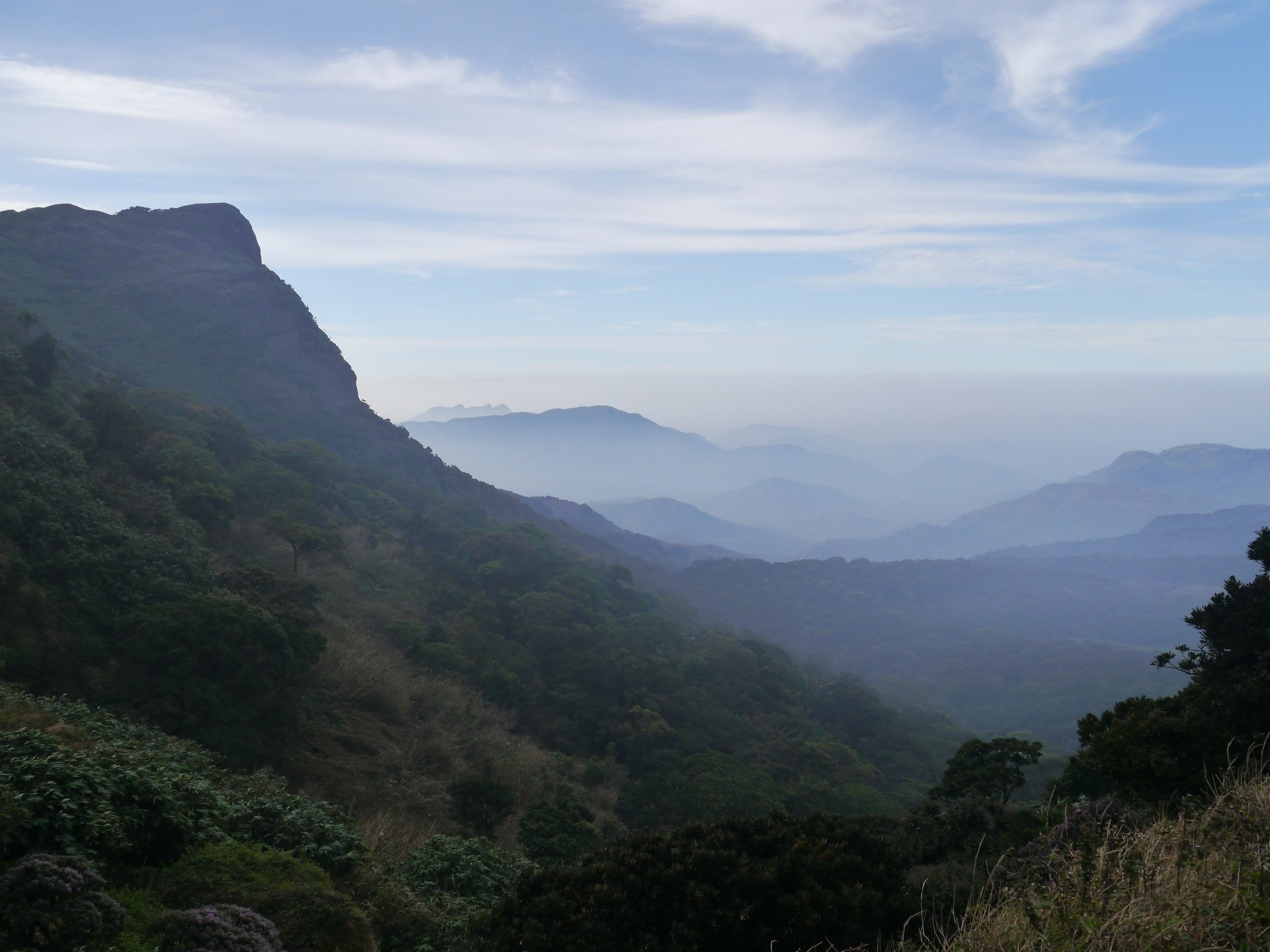
Agasthyamala Biosphere ReserveEndemism, Extreme Rarity and Biodiversity
Agasthyamala Biosphere Reserve at the southern tip of the Western Ghats: endemic birds such as the rare Ashambu Laughingthrush, its mammals, and why it is one of the richest and least talked-about forests of India.
When we think about endemic biodiversity hotspots in Indian mainland scenario, Western Ghats hit the mind at the first place. And on this 1600 km long mountain range, several reserve forests, tiger reserves, avifauna hotspots stands tall with their own glory. None of them are less or more important than others in terms of wilderness, flora and fauna. But Agasthyamala is one of most biodiverse hence less talked area in southern Western Ghats. If Agasthyamala need to be described in a few words then this is how it goes: High in Endemism, Extreme Biodiversity, Home to extreme rarity and unparalleled landscape.
Location
Situated at the southernmost tip of the Western Ghats, ABR covers almost 3500 square km of land and shares two states of India, Tamil Nadu (1,672 sq. km) and Kerala (1,828 sq. km). A total of 3 wildlife sanctuaries and one tiger reserve are situated in its land coverage. Wildlife sanctuaries are Neyyar, Peppara and Shendurney and the Tiger Reserve is Kalakkad Mundanthurai. From 90 m above sea level, ABR rises to its highest peak (Agasthyakoodam) at 1,868 m. It proves its landscape diversity and different forest zones as well as type of forests that provide this rich biodiversity its security of existence.
Avifauna: Endemic and Rare
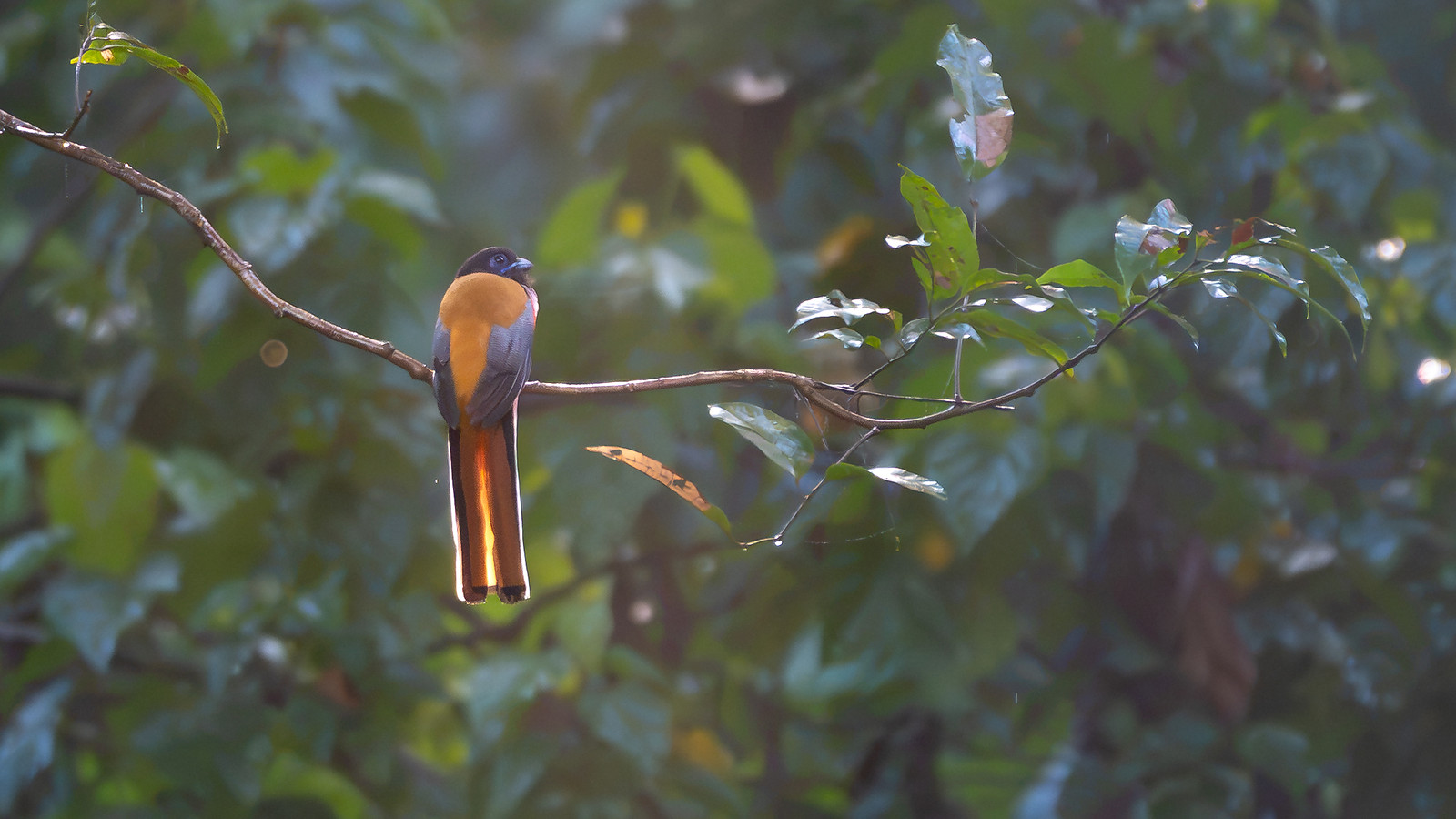
Home to 337 bird species including 20 endemic avifauna, Agasthyamalai offers birdwatchers and wildlife enthusiasts an incredible experience. And the most exclusive rarity is Ashambu Laughingthrush. In 2017, Kerala Laughingthrush was split into two distinct species – Palani Laughingthrush and Ashambu Laughingthrush. Unlike Palani LT, Ashambu LT has very limited distribution and Agasthyamala is the core range for this species. Only about 151 sightings have been reported till date and witness this bird species into the wilderness in Agasthyamala is not doubtable whether it’s a life time experience or not. Apart from this super rarity, what this place offers are Grey-headed Bulbul, Square-tailed Bulbul, Southern Hill Myna, Malabar Barbet, Grey Junglefowl (not specifically a Western Ghats endemic, but an Indian endemic), White-cheeked Barbet, Malabar Whistling Thrush (same as Grey Junglefowl), White-bellied Blue Flycatcher, Hill Swallow, Crimson-backed Sunbird, Rufous Babbler, Malabar Flameback, Malabar Imperial Pigeon, Black-throated Munia, Nilgiri Flowerpecker, Broad-tailed Grassbird, Malabar Grey Hornbill, Malabar Trogon (same as Grey Junglefowl), Malabar Woodshrike, Wayanad Laughingthrush, Nilgiri Wood-Pigeon and so on. Most of the bird species are resident here at this place (they may migrate altitudinally with the season).
Mammals: Unparalleled Diversity
Agasthyamala also holds a high degree of mammal diversity in its evergreen forests. Species like Nilgiri Langur, Lion-tailed Macaque, Indian Muntjac, Nilgiri Tahr, Stripe-necked Mongoose, Ruddy Mongoose, Nilgiri Marten, Travancore Flying Squirrel, Nilgiri Striped Squirrel and Mouse Deer are those who prove its rich biodiversity of mammals including those Western Ghats endemics. Tigers and Leopards are the two big cats that thrive here with stable and growing populations. Alongside with these species other notable species are Indian Gaur, Asian Elephants, Sloth Bear, Slender Loris, Indian Crested Porcupine, Small Indian Civet, Indian Wild Dog aka Dhole, Sambar, Spotted Deer and many more. Agasthyamalai is what a UNESCO World Network of Biosphere Reserve could consist of. By looking closely the mammalian fauna diversity, the altitude variation could easily explain their existence. In a single biosphere reserve where Stripe-necked Mongoose and Nilgiri Marten share their own ecological niche, the site already denotes its importance in terms of its ecological stability, vastness and variation. Compared with the famous tiger reserves in India, Kalakkad Mundanthurai has very little land coverage (1,601 sq. km), though in the 2022 tiger census at least 24 resident tigers were reported in this region, an increase on the previous census. So, we have a ray of hope to see more tigers in this very reserve in upcoming days.
Conclusion
Talking about ABR and restriction of page count are just words of opposite poles. From Montane Shola-Grassland ecosystem to Tropical evergreen forest, dry and wet deciduous forest to Tropical semi evergreen forest, Agasthyamalai holds more than 2,200 higher plant species, including 400+ endemic plants. We could hope for its uncompromised conservation efforts and make it one of the most noticed forest in Indian wildlife exploration.
References
- Mammalian diversity, distribution and potential key conservation areas in the Western Ghats, Honnavalli N. Kumara, Santanu Mahato, Mewa Singh, Sanjay Molur and Avadhoot D. Velankar
- eBird
- Journal of Threatened Taxa, Occurrence of mammalian small carnivores in Kalakad-Mundanthurai Tiger Reserve, Western Ghats, India, A. Venkatesh, N. Sridharan, S. Agnes Jeya Packiavathi & K. Muthamizh Selvan, 26 March 2021 | Vol. 13 | No. 3 | Pages: 17984–17989, DOI: 10.11609/jott.3670.13.3.17984-17989
- Agasthyamala – Man and the Biosphere Programme, UNESCO, https://www.unesco.org/en/mab/agasthyamala
Photo credit
- Cover: “Agasthyamalai 3” by Shyamal L., CC BY-SA 4.0, via Wikimedia Commons
- Malabar Trogon: © Wild Aranya